

THE REMAINS OF THE DAY
BY KAZUO ISHIGURO | PUBLICATION: JANUARY 1, 2010VINTAGE | GENRE: LITERARY FICTION
RATING: ★★★★
"A story of dignity, regret,
and the quiet ache of a life half-lived."
____________________________________________________________________
In the summer of 1956, Stevens, a long-serving butler at Darlington Hall, decides to take a motoring trip through the West Country. The six-day excursion becomes a journey into the past of Stevens and England, a past that takes in fascism, two world wars, and an unrealised love between the butler and his housekeeper.
____________________________________________________________________
"The Things Left Unsaid: Writing to Mr. Stevens"
Dearest James,
I know an introduction is customary — polite, even — but in this case, I suggest we dispense with it. It is you who matters, and no one else.
First, how did the end of your motoring trip fare? Was the return pleasant? I hope none of the inconveniences that plagued your departure followed you home. Mr. Farraday was right to suggest the journey; you had been cooped up in that great hall far too long. A change of scenery did you good. In the span of a single week, you seemed to grow — not outwardly, perhaps, but inwardly, where it counts.
I read your travelogue and musings with great interest. It is difficult not to be taken by them. Still, I noticed how often you answer your own questions. I suspect these are not signs of confusion but of hesitation — a reluctance to acknowledge truths long waiting at the edges of your mind. Hesitation and advancing age make uneasy companions, don’t they?
Your thoughts return again and again to greatness and dignity. It is clear you seek justification. And yes, James, you are a great and dignified butler. But does that absolve the mistakes you’ve made? Of course not, old chap. Your dignity lies in your unwavering professionalism, even in trying times — always the embodiment of restraint, calm, and placid composure. Yet in pursuing greatness, in holding fast to duty at the expense of feeling, you have forfeited something vital: relationships. Greatness and dignity fade, as your father’s did. Great butlers come and go. But a good friend, a loving husband, a present father — these are cherished for all time.
Oh, James. If only you had taken the leap…
But regret is a poor dwelling place. It has occupied your thoughts for far too many years already. Bless Miss Kenton for choosing a different path — even if partly to spite you — but fate has spoken. She is happily married now. She said all is well, did she not? Then move on, for her sake as much as your own. As for Lord Darlington, his folly is his alone. It is not yours to suffer. Loyalty is not measured by how much you endure, but by how well you serve. You know this now. Let the matter rest. Correcting the past is miserable business.
The man at the pier was right: nothing fruitful comes from dwelling too long on what cannot be changed. The day is not yet over. There is still much to be gained. Work on your bantering, as you resolved. Let humor lighten your steps. Women do enjoy a man with a bit of wit — but more importantly, humor may help you feel younger.
Farewell, James. Bless you on this new endeavor. Do send word of your progress, if you can.
Yours,
Louize
Dearest James,
I know an introduction is customary — polite, even — but in this case, I suggest we dispense with it. It is you who matters, and no one else.
First, how did the end of your motoring trip fare? Was the return pleasant? I hope none of the inconveniences that plagued your departure followed you home. Mr. Farraday was right to suggest the journey; you had been cooped up in that great hall far too long. A change of scenery did you good. In the span of a single week, you seemed to grow — not outwardly, perhaps, but inwardly, where it counts.
I read your travelogue and musings with great interest. It is difficult not to be taken by them. Still, I noticed how often you answer your own questions. I suspect these are not signs of confusion but of hesitation — a reluctance to acknowledge truths long waiting at the edges of your mind. Hesitation and advancing age make uneasy companions, don’t they?
Your thoughts return again and again to greatness and dignity. It is clear you seek justification. And yes, James, you are a great and dignified butler. But does that absolve the mistakes you’ve made? Of course not, old chap. Your dignity lies in your unwavering professionalism, even in trying times — always the embodiment of restraint, calm, and placid composure. Yet in pursuing greatness, in holding fast to duty at the expense of feeling, you have forfeited something vital: relationships. Greatness and dignity fade, as your father’s did. Great butlers come and go. But a good friend, a loving husband, a present father — these are cherished for all time.
Oh, James. If only you had taken the leap…
But regret is a poor dwelling place. It has occupied your thoughts for far too many years already. Bless Miss Kenton for choosing a different path — even if partly to spite you — but fate has spoken. She is happily married now. She said all is well, did she not? Then move on, for her sake as much as your own. As for Lord Darlington, his folly is his alone. It is not yours to suffer. Loyalty is not measured by how much you endure, but by how well you serve. You know this now. Let the matter rest. Correcting the past is miserable business.
The man at the pier was right: nothing fruitful comes from dwelling too long on what cannot be changed. The day is not yet over. There is still much to be gained. Work on your bantering, as you resolved. Let humor lighten your steps. Women do enjoy a man with a bit of wit — but more importantly, humor may help you feel younger.
Farewell, James. Bless you on this new endeavor. Do send word of your progress, if you can.
Yours,
Louize
*Originally posted here.
TWITTER | INSTAGRAM | PINTEREST | TUMBLR | BLOGLOVIN | GOODREADS
About the Author:
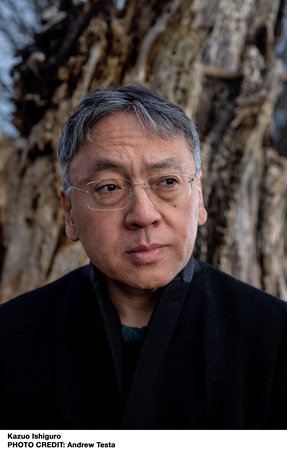 KAZUO ISHIGURO was born in Nagasaki, Japan, in 1954 and moved to Britain at the age of five. His works of fiction have earned him many honours around the world, including the Nobel Prize in Literature and the Booker Prize. His books have been translated into over fifty languages and The Remains of the Day and Never Let Me Go were both made into acclaimed films. He received a knighthood in 2018 for Services to Literature. He also holds the decorations of Chevalier de l'Ordre des Arts et des Lettres from France and the Order of the Rising Sun, Gold and Silver Star from Japan. His most recent novel, Klara and the Sun was a number one Sunday Times bestseller in both hardback and paperback.
Ishiguro also works occasionally as a screenwriter. His screenplay for the 2022 film Living received Academy Award (Oscar) and BAFTA nominations. Cinema adaptations of Klara and the Sun and A Pale View of Hills are due for release in 2025.
Photo by Andrew Testa
KAZUO ISHIGURO was born in Nagasaki, Japan, in 1954 and moved to Britain at the age of five. His works of fiction have earned him many honours around the world, including the Nobel Prize in Literature and the Booker Prize. His books have been translated into over fifty languages and The Remains of the Day and Never Let Me Go were both made into acclaimed films. He received a knighthood in 2018 for Services to Literature. He also holds the decorations of Chevalier de l'Ordre des Arts et des Lettres from France and the Order of the Rising Sun, Gold and Silver Star from Japan. His most recent novel, Klara and the Sun was a number one Sunday Times bestseller in both hardback and paperback.
Ishiguro also works occasionally as a screenwriter. His screenplay for the 2022 film Living received Academy Award (Oscar) and BAFTA nominations. Cinema adaptations of Klara and the Sun and A Pale View of Hills are due for release in 2025.
Photo by Andrew Testa


 Posts
Posts


